
Why timing still matters in a place that is always warm
The Maldives is warm every day of the year. It sits just north of the equator, the air hovers around 30°C in every month and the sea rarely drops below 27°C. So unlike a safari or a European city break, you are never choosing between "hot" and "cold". What you are choosing between is sunshine and showers, calm seas and choppy ones, glassy visibility and plankton-rich water, and full prices and quieter ones.
That choice matters, because a Maldives holiday is rarely cheap and usually marks something: a honeymoon, a milestone birthday, the family trip everyone has been saving for. Getting the timing right for your reason for going is the single easiest way to get more out of the money. This guide gives you the short answer first, then the detail month by month and traveller by traveller.
When is the best time to visit the Maldives?
The best time to visit the Maldives is during the dry north-east monsoon, from December to April, when skies are sunny, humidity is lower, seas are calm and underwater visibility is at its best. February and March are usually the driest, calmest months of all.
The wetter south-west monsoon runs from roughly May to November. It brings more cloud, stronger winds and passing downpours, with May and October to November often the most unsettled. It is also when resort rates drop, manta rays gather in their hundreds in Baa Atoll and the surf season peaks, so for some travellers it is the better choice.
Our honest pick: March to mid-April for the best balance of weather, calm water and slightly softer prices after the festive peak, and late August to September if you want value, manta rays and don't mind the odd tropical shower.
Maldives seasons at a glance
The Maldives has two seasons, named by locals after the monsoon winds that shape them: Iruvai, the north-east monsoon, and Hulhangu, the south-west monsoon.
- Dry season, Iruvai (December to April): sunny, settled weather with lower humidity and calm, clear seas. Daytime highs of about 30–32°C, with April the hottest month. Peak season, and the festive weeks from late December to early January are the most expensive of the whole year.
- Wet season, Hulhangu (May to November): warm and more humid, with stronger winds, more cloud and short, heavy downpours, often followed by sunshine. Rarely a full washout. Low season, with the best rates of the year, and the heart of manta and surf season.
- The changeovers (late April to May, and October to November): the weather can be the most changeable of all as the monsoon swings round, but these shoulder weeks often bring real value.
One useful point: the Maldives stretches more than 800 kilometres from north to south across the equator, so rain tends to fall a little more evenly through the year in the far south (Addu and Huvadhoo) than in the north. Most resorts are in the central atolls near Malé, where the pattern above holds true.
Maldives weather month by month
A quick reference to match your dates to the islands. Air temperatures are typical daytime highs; the sea stays between about 27°C and 29°C all year.
| Month | Weather | Sea and visibility | Crowds and prices | Our verdict |
|---|---|---|---|---|
| January | Dry, sunny, breezy | Calm, very clear | Peak early in the month, then high | Excellent: beach and snorkelling |
| February | Driest month | Calmest, clearest water | High | Excellent: honeymoons and diving |
| March | Hot, dry, settled | Calm, excellent visibility | High, easing after Easter | Our top all-round pick |
| April | Hottest month, mostly dry | Glassy, warm water | Shoulder from mid-April | Excellent: value at the end of the dry season |
| May | Monsoon arrives; wettest month | Choppier, more plankton | Low | Value; manta season begins |
| June | Showers and windy spells | Rougher on exposed sides | Low | Value, surfing and mantas |
| July | Mixed, sunny spells between showers | Variable; plankton-rich | Low to moderate | Good: mantas, SA winter school holidays |
| August | Mixed, often brighter | Variable | Low to moderate | Good: peak manta season |
| September | Showers easing | Improving | Low | Good value: mantas and surf |
| October | Changeable, can be wet | Variable | Quiet | Value with flexible expectations |
| November | Rain easing, dry season arriving | Calming, clearing | Rising late in the month | Good, especially late November |
| December | Drying, sunny | Calm, clear | Peak from around 20 December | Great: book very early for the festive weeks |
The single most useful thing to know: the Maldives is warm in every month, but the dry season gives you the most reliable sunshine and the clearest water, while the wet season gives you the best value and the best manta encounters.
Which atoll and which resort? Why where you stay changes the answer
With well over a hundred resort islands, the Maldives can look like a sea of near-identical villas. In practice, three things make a bigger difference to your holiday than the month you pick.
How you get there: speedboat, seaplane or domestic flight
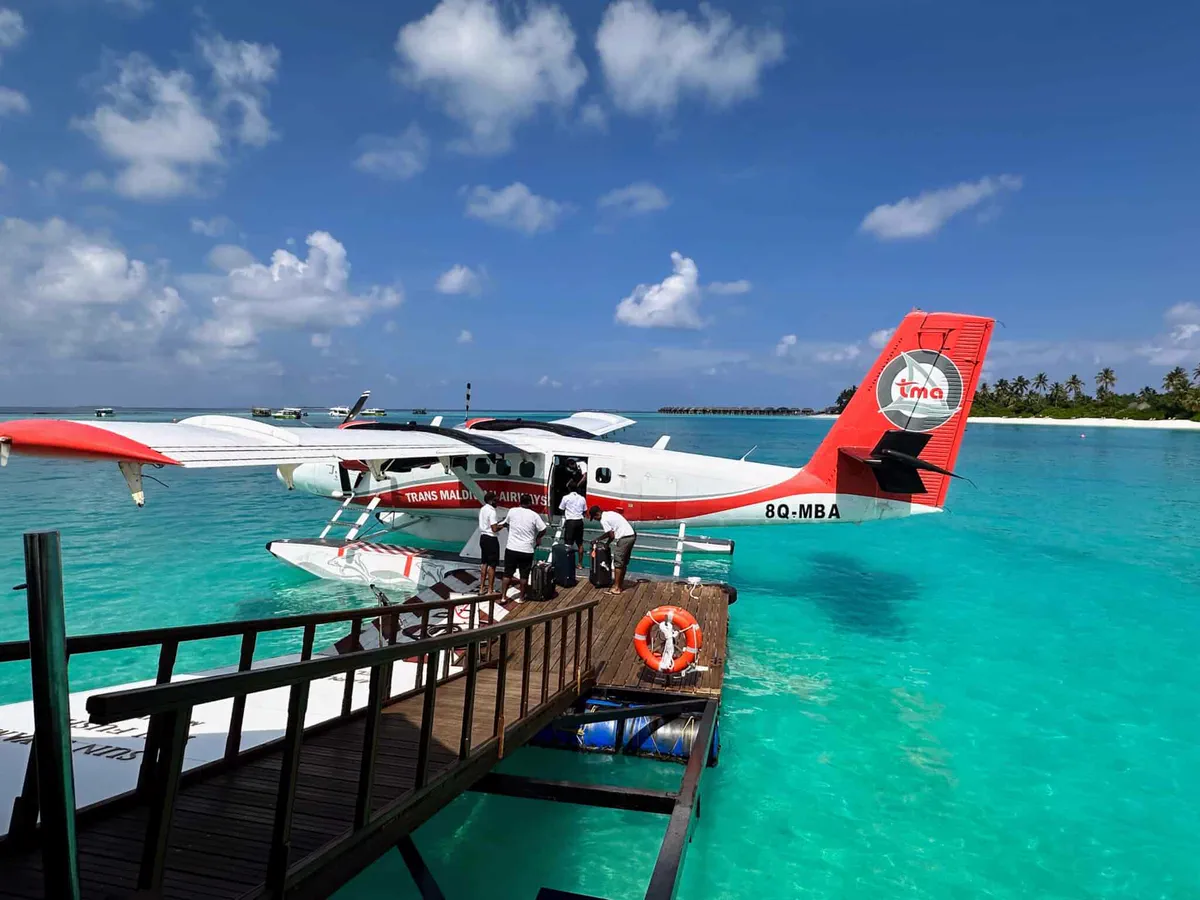
Resorts close to Malé (in North and South Malé Atoll) are reached by speedboat, often in under an hour. Resorts further out need a seaplane or a domestic flight plus a boat. Seaplanes are a highlight in themselves, but they only fly in daylight: if your international flight lands after about 3pm, you will usually spend the first night at a hotel near the airport and fly out in the morning. This matters when you are choosing flights from South Africa, and it is one of the first things we check.
The house reef
If snorkelling is important to you, ask about the house reef: the reef that sits right off the island's beach. A good house reef means you can swim out from your villa or the beach and see turtles, reef sharks and clouds of fish without booking a boat trip. Some islands have spectacular house reefs; others have beautiful sandy lagoons but very little to see underwater.
The atoll and the season
The atolls feel the monsoon differently. Baa Atoll, a UNESCO Biosphere Reserve north of Malé, is home to Hanifaru Bay, the world-famous manta feeding site, and is at its best in the wet season. South Ari Atoll is known for its resident whale sharks, which can be seen in any month. And during the wet season, the side of an atoll sheltered from the south-westerly wind is calmer for swimming and boat trips. Explore the islands on our Maldives destination page, or ask us which resorts suit your month best.
The best time to visit the Maldives for your kind of trip
There is no single best month; there is a best month for you. Here is how we match the calendar to the traveller.
Best overall weather: January to April
This is the heart of the dry season: sunny days, low humidity and calm, clear water. February is usually the driest month, while March and early April combine excellent weather with prices that start to soften once the European winter holidays and Easter have passed.
Best for honeymooners: February to April, and November
For couples, the dry season is the classic choice: long, sunny days, calm lagoons for paddleboarding and evenings warm enough to dine on the sand. If you are getting married in the South African summer, late November is a lovely, quieter alternative to the festive peak, as the dry season returns. Most resorts offer honeymoon extras such as a sunset cruise or a private dinner on a sandbank: ask us which ones apply to your dates.

Best for snorkelling and diving: December to April for visibility, May to November for mantas
Two very different seasons suit divers and snorkellers.
- December to April: the calmest seas and the best underwater visibility of the year, often 25–40 metres. Ideal for house-reef snorkelling, reef sharks, turtles and the channel dives the Maldives is famous for.
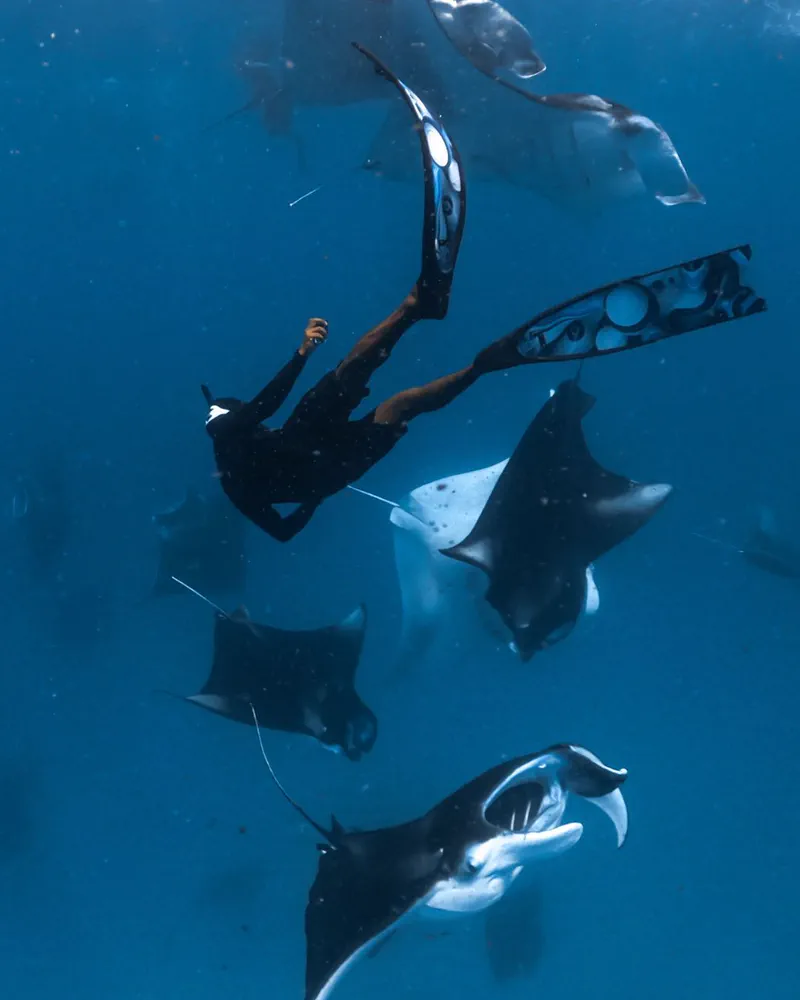
- May to November: the south-west monsoon brings plankton, and the plankton brings the manta rays. At Hanifaru Bay in Baa Atoll, mantas gather to feed in large numbers, with the best chances usually from late July to early October. Visibility is lower, but the encounters can be unforgettable. Hanifaru is a protected area with strict visitor limits and is snorkel-only, so it pays to stay at a nearby resort and book through it.
Whale sharks live around South Ari Atoll all year, so a sighting is possible in any month. They are never guaranteed, so treat one as a bonus rather than the reason for your dates.
Best for surfing: March to October
The Maldives is one of the world's great surf destinations, and the season runs the opposite way to the beach season. The swells come with the south-west monsoon, from roughly March to October, with the biggest and most consistent waves from June to August. The shoulder months of April to May and September to October are often the sweet spot, with good swell, lighter winds and fewer surfers. The best-known breaks are in the North and South Malé atolls, close to the airport, with a handful of resorts and surf charters built around them.
Best for families: the South African autumn school holidays
The calendar is kind to South African families here. The autumn school holidays (in 2027, from 20 March to 5 April) fall at the end of the dry season, with calm, warm water and sunny days: arguably the best family window of the year. The December holidays (from 12 December 2026 to the start of the new school year) are also excellent for weather, but they are the most expensive and most heavily booked weeks, so plan very early.
The winter school holidays (26 June to 19 July 2027) and the spring break (2 to 10 October 2027) fall in the wet season. The weather is less predictable, but rates are lower and many resorts run family offers at this time. Wherever you go, choose a resort with a kids' club, a shallow lagoon and a good pool, and consider a beach villa rather than an overwater one with small children.

Best for quieter travel: mid-April to early June, and September to early November
If you would rather have the island to yourself, aim for the shoulder and low-season weeks. Late April gives you the tail of the dry season after the Easter crowds, while September and October are among the quietest months of all. You trade some weather certainty for emptier beaches, more attentive service and better rates.
Best for value: May to October, outside school holiday weeks
The Maldives is priced in US dollars, so for South Africans the rand matters as much as the season. The best value usually sits in the wet season, when resorts compete hard with reduced rates, free nights, meal-plan upgrades and transfer offers. Booking early also protects you against the rand weakening before you travel. We keep an eye on current Maldives holiday offers, and our Deal Seeker brings every current deal and live rate together in one place.
When to avoid, and why it still might be fine
May, and the changeable weeks of October and November, bring the most unsettled weather of the year: more cloud, stronger winds and some heavy downpours. For a first visit or a once-in-a-lifetime honeymoon where perfect sunshine is the priority, we would usually steer you towards the dry season.
That said, Maldives rain usually falls in short, heavy bursts rather than all day, the water is still warm, and low-season rates can be very good. For divers chasing mantas, surfers and flexible travellers who mostly want a beautiful, quiet break, the wet season can be the smarter choice. Go in with the right expectations, and make sure your travel insurance is in place.
The other period to plan carefully is the festive season. From around 20 December to early January, rates are at their highest, many resorts insist on minimum stays and the best villas sell out many months ahead.
It is also worth knowing about Ramadan. The Maldives is a Muslim country, and during the holy month (expected to run from around 7 February to 8 March 2027, depending on the moon) life on the local islands slows during daylight hours. Resorts operate exactly as normal, so for most holidays it makes no difference at all.
Beyond the resort: local islands and Malé
Most visitors stay on a private resort island, but the local islands offer a different side of the Maldives: guesthouses, small cafés, friendly villages and much lower prices. On local islands, alcohol is not served, and covering shoulders and knees away from the designated tourist beaches is expected. A day trip or a couple of nights on a local island combines well with a resort stay for travellers who want to see how Maldivians live.
Malé, the capital, is compact and busy, with a fish market, a historic Friday Mosque built from coral stone and a lively waterfront. Most travellers only pass through, but a half-day visit before an evening flight home can be a nice way to end the trip.
Combining the Maldives with Sri Lanka
The Maldives pairs beautifully with Sri Lanka, a short flight away. The timing lines up neatly: from December to March, the Maldives' dry season matches the best weather on Sri Lanka's south and west coasts and in the hill country, so you can spend a week exploring Galle, the tea estates and the ancient temples, then finish with a few nights doing very little on a Maldives beach. We usually plan it Sri Lanka first, Maldives second, so you end the trip rested. Read more in our guide to the best time to visit Sri Lanka.
Planning your Maldives holiday from South Africa
A few practical notes so nothing catches you out:
- Entry and visas. South African passport holders receive a free 30-day visa on arrival. Your passport should be valid for at least six months, and you will need a confirmed booking and a return or onward ticket. Rules can change, so check before you travel: our visa and entry information page points you to the official sources.
- The IMUGA traveller declaration. Every visitor must complete the Maldives' online IMUGA traveller declaration within the 96 hours before their flight. A declaration submitted earlier than that is not valid, so put a reminder in your diary.
- Getting there. There are no non-stop flights from South Africa. The most popular routings from Johannesburg connect through Doha (Qatar Airways), Dubai (Emirates) or Abu Dhabi (Etihad), with total journey times from around nine and a half hours. Addis Ababa (Ethiopian Airlines) and Nairobi (Kenya Airways) are other options. From Cape Town, the Gulf carriers connect the same way. Remember the seaplane daylight rule when you choose your flights.
- Health. A yellow fever certificate is not needed when you fly from South Africa via the Gulf. Ethiopia and Kenya are yellow fever countries, so if you connect through Addis Ababa or Nairobi, check the rules for both the Maldives and your return to South Africa before you book. There is no malaria risk on the resort islands.
- Taxes and the real price. Resort rates are usually quoted before taxes. A green tax of US$12 per person per night applies at resorts (US$6 at guesthouses), on top of the tourism goods and services tax and service charge. The airport departure tax is included in your air ticket. We always quote you the full price, so there are no surprises at check-out.
- Travel insurance. Comprehensive cover, including medical evacuation, is essential: the nearest major hospitals are in Malé, which can be a seaplane ride away. Arrange travel insurance before you go.
- Money. Resorts charge in US dollars and take cards everywhere. Bring a few small US dollar notes for tips.
For the most current official information, the Maldives Immigration site and the official tourism board, Visit Maldives, are the sources we point travellers to.
Frequently asked questions
What is the best month to visit the Maldives?
March is our favourite all-rounder: dry, sunny and calm, with excellent visibility and prices that start to ease once Easter has passed. If you want the most reliable weather of all, February is usually the driest month.
What is the rainy season in the Maldives?
The wet season, the south-west monsoon, runs from roughly May to November. May and October to November are often the most unsettled months. Rain usually falls in short, heavy showers rather than all day, and it is warm throughout.
Is it worth going to the Maldives in the rainy season?
Yes, for the right traveller. Rates are lower, resorts are quieter and it is the best time for manta rays at Hanifaru Bay and for surfing. If perfect sunshine is essential, for example on a honeymoon, the dry season from December to April is the safer choice.
Do South Africans need a visa for the Maldives?
No visa is needed in advance. South African passport holders receive a free 30-day visa on arrival. You must also complete the online IMUGA traveller declaration within the 96 hours before your flight.
When can you see manta rays in the Maldives?
Manta rays are seen all year, but the famous feeding gatherings at Hanifaru Bay in Baa Atoll happen in the wet season, from about May to November, with the best chances from late July to early October.
How many nights do you need in the Maldives?
Five to seven nights is ideal for most holidays, given the long journey from South Africa and the seaplane or boat transfer at each end. Honeymooners often stay seven to ten nights, sometimes split between two resorts.
How long is the flight from South Africa to the Maldives?
There are no non-stop flights. Connecting through Doha, Dubai or Abu Dhabi, the journey from Johannesburg usually takes around nine and a half to eleven hours, plus your transfer from Malé to the resort.
Final recommendations
If you want the simplest answer: go in February to April for the most reliable weather and calm, clear water, late March if you are travelling in the South African autumn school holidays, and late August to September if manta rays, surf or value matter more than guaranteed sunshine. Book the festive season as early as you can, and always check where your resort sits and how you will get there before you choose your flights.
The Maldives rewards a trip that is carefully put together: the right atoll for the month, a resort that suits how you like to spend your days, flights that land in time for your seaplane, and an honest price with every tax included. That is the kind of planning we enjoy. Tell us your dates and what you have in mind, and we will shape a tailor-made Maldives holiday around them. No obligation, and a personal reply from our team. You can also check live Maldives rates on our World Leisure live rates page, or read our guide to the best time to visit Mauritius if you are still choosing your island.
Planning a Maldives trip?
Traville Travel arranges Maldives holidays personally, from flights to the finer details. Tell us what you have in mind and we will build a tailor-made quote, no obligation.


