
Warm every month, but not the same every month
The Seychelles sits just south of the equator, so it is warm all year: daytime highs of roughly 28–32°C and a sea that stays around 26–29°C. There is no winter to avoid. What changes through the year is the wind, and with it the rain, the state of the sea, the clarity of the water and which beaches are at their best.
That matters more here than in most island destinations, because a Seychelles holiday usually means moving between islands by ferry, small plane or yacht. Calm water makes those crossings, the snorkelling and the beach days far more enjoyable. This guide gives you the short answer first, then the detail month by month and traveller by traveller.
When is the best time to visit the Seychelles?

The best time to visit the Seychelles is during the calm inter-monsoon months of April to May and October to November, when the winds drop, the sea is flat and clear, and the weather is warm and mostly settled. These are the ideal months for snorkelling, diving and hopping between Mahé, Praslin and La Digue.
The south-east trade winds blow from roughly May to September. It is the driest, slightly cooler and breeziest time of year, with choppier seas on exposed coasts. The north-west monsoon runs from roughly December to March: hot, humid and lush, with the most rain, especially in December and January, though it usually falls in short, heavy showers.
Our honest pick: late April to May for the best balance of calm seas, sunshine and value, and October to early November if you want the same calm water plus a chance of whale sharks.
Seychelles seasons at a glance
The Seychelles has two main seasons, set by the trade winds, with calm changeover months in between.
- North-west monsoon (December to March): the hot, humid, green season. More rain, with January usually the wettest month, but also plenty of sunshine between showers and generally lighter winds and calmer seas. The festive weeks are the busiest and most expensive of the year.
- Calm transition (April and May): light, variable winds, flat seas and excellent water clarity. April is often the hottest month, with highs occasionally above 32°C.
- South-east trade winds (May to September): the driest and slightly cooler time of year, with July usually the coolest and driest month. Steady winds keep the heat comfortable but make the sea rougher on south- and east-facing coasts, and can bring seaweed to some beaches.
- Calm transition (October and November): the winds ease again, the sea settles and the water clears. October usually has more dry days than any other month.
Cyclones are very rare. The Seychelles lies close to the equator, and the cyclones of the south-west Indian Ocean form further south, so they almost never reach the main islands.
Seychelles weather month by month
A quick reference to match your dates to the islands. Air temperatures are typical daytime highs; the sea stays between about 26°C and 29°C all year.
| Month | Weather | Sea and wind | Crowds and prices | Our verdict |
|---|---|---|---|---|
| January | Hot, humid; wettest month | Light winds, calm on most coasts | High early in the month | Good if you don't mind showers |
| February | Hot, humid, showers | Calm, good visibility | Moderate | Good: lush and quieter |
| March | Hot; rain easing | Calm, clear | Moderate, Easter busier | Very good |
| April | Hottest month, mostly settled | Flat, glassy, excellent visibility | Shoulder | Excellent: our top all-round pick |
| May | Warm, drier; trade winds arrive late in the month | Calm early, breezier later | Shoulder | Excellent: value and calm water |
| June | Dry, breezy, slightly cooler | Choppy on south- and east-facing coasts | Low to moderate | Good: sailing, dry days, value |
| July | Coolest, driest month | Windy; rough on exposed coasts | Moderate; SA winter school holidays | Good for families who choose the right beach |
| August | Dry, breezy | Windy; rough on exposed coasts | High in European holiday weeks | Good: dry weather, book ahead |
| September | Dry, winds easing | Settling late in the month | Moderate | Good: start of whale-shark season |
| October | Most dry days of the year | Calm, clear | Shoulder | Excellent: calm seas and whale sharks |
| November | Warm, showers returning | Calm, pleasant | Shoulder | Very good: turtle nesting begins |
| December | Hot, humid, rainier | Light winds, mostly calm | Peak from around 20 December | Good: book very early for the festive weeks |
The single most useful thing to know: the Seychelles is warm in every month, but the calm months of April to May and October to November give you the flattest seas, the clearest water and the easiest island hopping.
Which island, and which side of it? Why the wind changes the answer
The Seychelles has 115 islands, but most holidays centre on three: Mahé, the largest island, with the international airport and the capital, Victoria; Praslin, home to the Vallée de Mai and Anse Lazio; and La Digue, the small, slow-paced island of bicycles and the famous boulders of Anse Source d'Argent. Explore them on our Seychelles destination page.
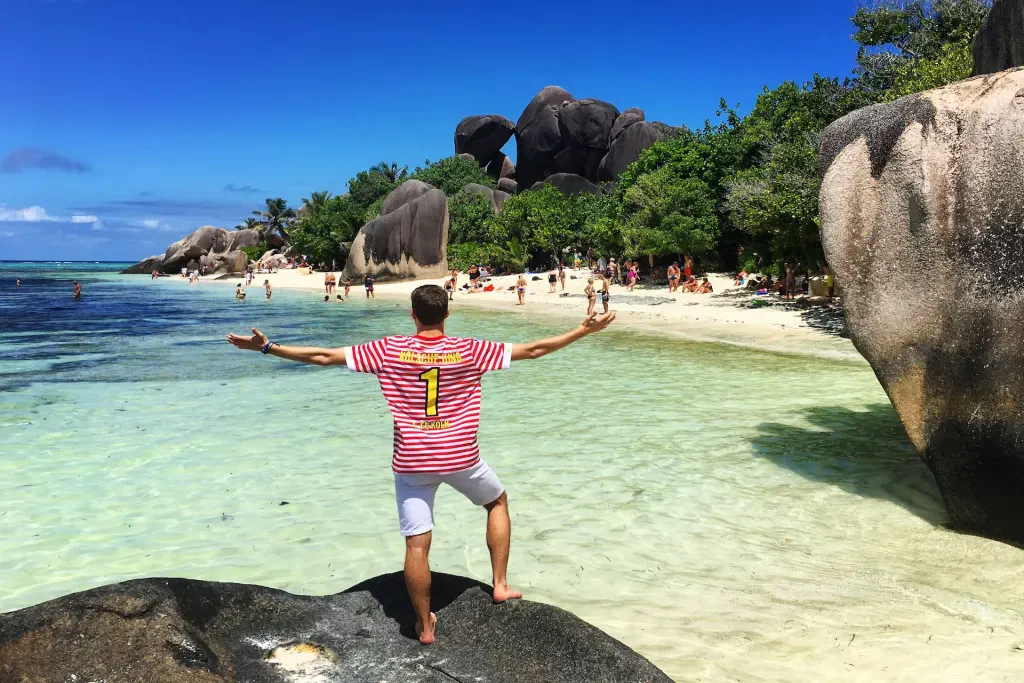
Choose the coast to suit the season
Because the wind changes direction through the year, the side of the island you stay on matters.
- During the south-east trade winds (about May to September), south- and east-facing beaches can be windy and choppy, and some collect seaweed. North- and west-facing bays, such as Beau Vallon on Mahé and Anse Lazio on Praslin, are usually more sheltered and better for swimming.
- During the north-west monsoon (about December to March), the pattern largely swaps, and the south- and east-facing coasts are often the calmer choice.
This is one of the first things we look at when we match hotels to your dates. A beautiful hotel on the wrong coast for the month can mean a beach that is great to look at but hard to swim from.
Island hopping between Mahé, Praslin and La Digue
Most travellers combine two or three islands. The ferry from Mahé to Praslin takes about an hour, and Praslin to La Digue is a short hop of around 15 minutes. You can also fly from Mahé to Praslin in about 15 minutes on a small plane. In the calm months the ferry crossing is easy; in the windiest weeks of June to August it can be rough, so if anyone in your group is prone to seasickness, the short flight is worth considering.
The best time to visit the Seychelles for your kind of trip
There is no single best month; there is a best month for you. Here is how we match the calendar to the traveller.
Best overall weather: April to May, and October to November
The transition months give you warm, mostly dry days, light winds and the calmest sea of the year. If you want the most dry days, October is usually the best bet, while July is the driest month but also one of the windiest.
Best for honeymooners: April to May, and October to November
For couples, the calm months are hard to beat: flat water for swimming and kayaking, clear skies for sunset dinners and easy crossings if you split your stay between islands. A popular honeymoon plan is a few nights on Praslin or La Digue for beaches and nature, then a few nights at a resort on Mahé or on a private island. If you are marrying in the South African summer, late November is a lovely, quieter alternative to the festive peak.
Best for snorkelling and diving: April to May, and October to November
The calm months bring the clearest water, often with visibility of 30 metres or more, and the easiest boat trips to marine parks such as Ste Anne off Mahé and Curieuse off Praslin. Expect turtles, reef sharks, rays and huge shoals of reef fish.
Whale sharks pass through Seychelles waters in the plankton-rich months, usually from about September to November, with sightings most likely around Mahé. They are wild animals and never guaranteed, so treat one as a bonus rather than the reason for your dates.
Best for wildlife on land: October to January
The Seychelles is a nature destination as much as a beach one. Hawksbill turtles nest on beaches such as those on Cousin Island, a nature reserve off Praslin, from about October, with the busiest months from November to January. The Vallée de Mai, a UNESCO World Heritage Site and home of the coco de mer palm, and the giant tortoises of Curieuse and Aldabra can be enjoyed in any month.
Best for sailing and island hopping: April to May, October to November, and the trade-wind months for keen sailors
A yacht charter is one of the loveliest ways to see the inner islands. The calm months suit most people, with gentle winds, quiet anchorages and smooth passages. The steady south-east trade winds of June to September give reliable, stronger sailing winds, which experienced sailors enjoy, but they make the crossings livelier and some anchorages more exposed. Tell us how much sailing experience your group has, and we will suggest the right month and the right kind of charter.
Best for families: the South African autumn and spring school holidays

The calendar is kind to South African families. The autumn school holidays (in 2027, from 20 March to 5 April) fall as the north-west monsoon fades into the calm April weather, and the spring break (2 to 10 October 2027) lands in one of the best months of the year: calm, clear and dry. Both are excellent family windows.
The winter school holidays (26 June to 19 July 2027) fall in the trade-wind season, which is dry and comfortable but windy. Choose a hotel on a sheltered, north- or west-facing beach and it works well. The December holidays (from 12 December 2026) are warm and lush but the most expensive weeks of the year, so plan very early. Wherever you go, a hotel with a pool, a calm swimming beach and family rooms makes all the difference.
Best for quieter travel: February, and late April to June
February is quieter once the festive season is over, and the islands are at their greenest. Late April to June gives you calm water, then dry trade-wind days, with fewer visitors than the European summer and festive peaks.
Best for value: May to June, and outside school and festive holidays
Many Seychelles hotels price in euros or US dollars, so for South Africans the rand matters as much as the season. The best value usually sits in the shoulder and low weeks, when hotels run reduced rates, free nights and meal-plan offers. Booking early also protects you against the rand weakening before you travel. We keep an eye on current Seychelles holiday offers, and our Deal Seeker brings every current deal and live rate together in one place.
When to avoid, and why it still might be fine
December and January bring the most rain and the highest humidity. Most of it falls in short, heavy showers with sunshine in between, and the islands look their most lush, but if blue skies every day are the priority, the calm months are the safer choice.
June to August is the windiest time of year. It is dry and comfortable, but ferry crossings can be rough, and some south- and east-facing beaches are choppy or collect seaweed. Pick a sheltered beach and it is still a very good time to visit, especially for walking and exploring, when the cooler, drier air makes the hikes on Mahé and Praslin more pleasant.
The other period to plan carefully is the festive season. From around 20 December to early January, rates are at their highest, many hotels insist on minimum stays, and the best rooms and ferry times sell out early. Whenever you go, make sure your travel insurance is in place.
Beyond the beach: Victoria, nature walks and Creole culture
Victoria, one of the smallest capitals in the world, is worth a half-day: the colourful Sir Selwyn Selwyn-Clarke market, the little clock tower and the Hindu temple are all within a short walk. On Mahé, the Morne Seychellois National Park has rewarding hikes with views over the coast, best done in the cooler, drier months from June to September. And Seychellois Creole culture comes through in the food: fish and octopus curries, grilled fish with spicy chutneys and fresh tropical fruit.
Combining the Seychelles with other trips
The Seychelles works well on its own, but its short direct flight from Johannesburg also makes it an easy add-on. It pairs beautifully with a safari: spend a few days in the bush, then fly to the islands to unwind. If you are still deciding between Indian Ocean islands, our guides to the best time to visit the Maldives and the best time to visit Mauritius help you compare.
Planning your Seychelles holiday from South Africa
A few practical notes so nothing catches you out:
- Entry and travel authorisation. South African passport holders do not need a visa. You receive a free Visitor's Permit on arrival, but you must first apply online for a Seychelles Travel Authorisation (a small fee applies) before you fly. Your passport should be valid for the whole stay, and you will need confirmed accommodation, a return or onward ticket and enough funds for your stay. Rules can change, so check before you travel: our visa and entry information page points you to the official sources.
- Getting there. Air Seychelles flies non-stop from Johannesburg to Mahé a few times a week, in about five hours. Other routings connect through Dubai (Emirates), Doha (Qatar Airways), Addis Ababa (Ethiopian Airlines) or Nairobi (Kenya Airways). From Cape Town, you connect via Johannesburg or one of these hubs.
- Health. A yellow fever certificate is not needed when you fly direct from South Africa or via the Gulf. Ethiopia and Kenya are yellow fever countries: a short airport transit is usually fine, but a longer stopover can mean you need a certificate, so check the rules for both the Seychelles and your return to South Africa before you book. There is no malaria in the Seychelles, but there are mosquitoes, so pack repellent.
- Taxes and the real price. Larger hotels and island resorts charge a Tourism Environmental Sustainability Levy per person per night (children aged 12 and under are exempt). We always quote you the full price, so there are no surprises at check-out.
- Travel insurance. Comprehensive cover, including medical evacuation, is essential, especially if you are staying on an outer island. Arrange travel insurance before you go.
- Money. The local currency is the Seychelles rupee, but many hotels and activities are priced in euros or US dollars. Cards are widely accepted; carry some cash for small shops, buses and tips.
For the most current official information, the Seychelles Travel Authorisation site and the official tourism board, Tourism Seychelles, are the sources we point travellers to.
Frequently asked questions
What is the best month to visit the Seychelles?
April is our favourite all-rounder: warm, mostly dry, with flat seas and excellent water clarity. October is just as good, with the most dry days of the year and a chance of whale sharks.
What is the rainy season in the Seychelles?
The wettest time of year is the north-west monsoon, from roughly December to March, with January usually the wettest month. Rain tends to fall in short, heavy showers rather than all day, and it stays warm throughout.
When is the sea calmest in the Seychelles?
The calmest seas are in the transition months between the monsoons, April to May and October to November, when the winds are light and variable. From about June to August the south-east trade winds make the sea choppier on exposed coasts.
Do South Africans need a visa for the Seychelles?
No visa is needed. South African passport holders receive a free Visitor's Permit on arrival, but must apply online for a Seychelles Travel Authorisation before travelling and carry proof of accommodation and a return ticket.
When can you see whale sharks in the Seychelles?
Whale sharks are usually seen from about September to November, when plankton draws them to the waters around Mahé. Sightings are never guaranteed, so treat one as a bonus.
How many nights do you need in the Seychelles?
Seven to ten nights is ideal, which gives you time for two or three islands without rushing. If you are only visiting one island, five to seven nights works well.
How long is the flight from South Africa to the Seychelles?
Air Seychelles flies non-stop from Johannesburg to Mahé in about five hours. Connecting routes via the Gulf or East Africa take longer.
Final recommendations
If you want the simplest answer: go in April to May or October to November for calm seas, clear water and easy island hopping, early October if you are travelling in the South African spring school holidays, and June to September for dry, breezy days, as long as you choose a sheltered beach. Book the festive season as early as you can, and think about which side of the island you will stay on before you choose your hotel.
The Seychelles rewards a trip that is carefully put together: the right islands for the month, hotels on the right side of them, smooth ferry or flight connections, and an honest price with every levy included. That is the kind of planning we enjoy. Tell us your dates and what you have in mind, and we will shape a tailor-made Seychelles holiday around them. No obligation, and a personal reply from our team. You can also check live Seychelles rates on our World Leisure live rates page.
Planning a Seychelles trip?
Traville Travel arranges Seychelles holidays personally, from flights to the finer details. Tell us what you have in mind and we will build a tailor-made quote, no obligation.


