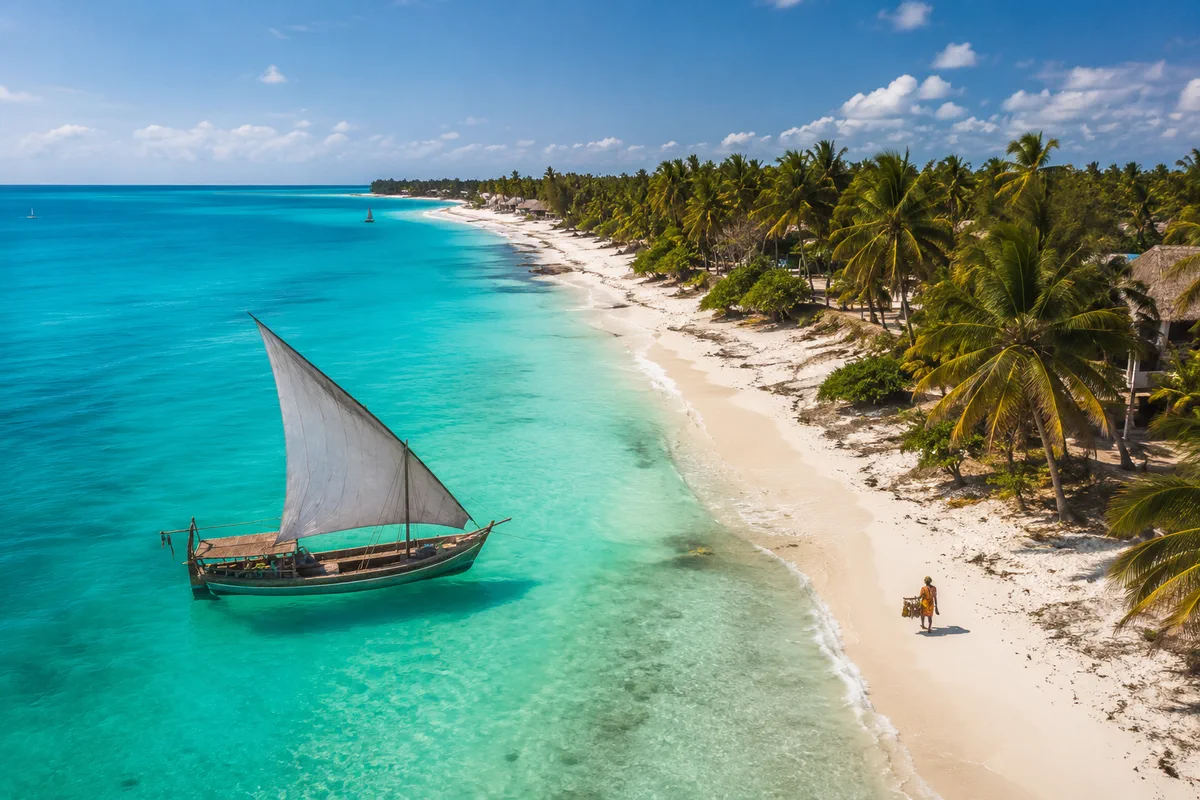
The Indian Ocean at its most effortless
Ask most South Africans to picture Kenya and they'll go straight to the Masai Mara — lion-gold plains, a river crossing, that once-in-a-lifetime migration. Fewer of us picture what waits on the other side of the country: a 500-kilometre coastline of powder-white sand, warm turquoise lagoons held behind a living coral reef, and a Swahili culture that has been trading across the ocean for a thousand years.
Kenya's coast is one of the most rewarding warm-water beach destinations within easy reach of Johannesburg or Cape Town, and it pairs with a safari more naturally than almost anywhere else in Africa. This guide covers when to go, what the weather actually does month to month, which stretch of coast suits which kind of traveller, and the practical details that matter when you're planning the trip from South Africa.
The best time to visit Kenya
The best time to visit Kenya's beaches is during its two dry seasons: January to March and June to October. These months bring hot, sunny days, calm seas and clear water over the reef — ideal for swimming, snorkelling and simply lying on the sand. January and February are the hottest and driest; June to October is a touch cooler and, crucially, overlaps with the Great Migration in the Masai Mara, which makes it the sweet spot for a combined safari-and-beach holiday.
Kenya sits on the equator, so it doesn't have summer and winter in the way we do — it has wet seasons and dry seasons. The two periods to plan around are the "long rains" of April and May, when many coastal lodges are quietest and some close entirely, and the shorter "short rains" of November, which tend to arrive as brief afternoon downpours rather than washed-out days.
Kenya weather by season
The coast is tropical and warm all year — daytime temperatures rarely drop below the mid-20s, and the sea stays a bath-like 26–29°C. What changes through the year is rainfall, humidity and how busy the beaches are.
| Months | Season | Coast weather | Good for |
|---|---|---|---|
| Jan – Mar | Hot dry season | Hot, humid, mostly clear skies; calm seas | Beach holidays, diving, honeymoons |
| Apr – May | Long rains | Warm but wet; heaviest rainfall, higher humidity | Lowest prices; fewer crowds (some lodges close) |
| Jun – Oct | Cool dry season | Warm, drier, pleasant breeze; excellent visibility | Safari + beach combos, families, value in shoulder weeks |
| Nov | Short rains | Warm with short afternoon showers | Quieter beaches, green landscapes, good rates |
| Dec | Festive dry season | Hot, dry, festive; peak demand | Holiday-season sun (book well ahead) |
The single most useful thing to know: you can have a wonderful Kenyan beach holiday in almost any month, but matching your dates to the dry seasons gives you the most reliable weather and the clearest water.
The best beaches in Kenya
Kenya's coast splits neatly into a south coast (below Mombasa) and a north coast (above it), each with its own character. Here are the four stretches worth knowing.
Diani Beach
If you only have time for one, make it Diani. This is Kenya's best-known beach for good reason: a long, wide arc of blindingly white sand backed by palms and casuarina trees, with a shallow, reef-protected lagoon that glows every shade of turquoise. It's polished without feeling packed, with everything from intimate boutique hotels to full-service family resorts.
Diani suits almost everyone — honeymooners, families, and anyone who wants proper beach-holiday infrastructure. It's also a hub for watersports: kitesurfing when the trade winds blow, diving on the outer reef, and dhow trips out to sandbars at low tide. Troops of rare Colobus monkeys in the coastal forest are a lovely, unexpected bonus. Diani is reached via Ukunda airstrip (a short hop from Mombasa or Nairobi), which keeps transfer times short.
Watamu
Watamu, on the north coast, is the connoisseur's choice — smaller, quieter and wrapped around a marine national park that ranks among the best snorkelling and diving in East Africa. The lagoon here is spectacular, dotted with rocky islets, and green and hawksbill turtles nest on the beaches. It's a place for travellers who want reef life, boutique lodges and a slower rhythm rather than resort buzz. If you love the water, Watamu rewards you.
Malindi
Just up the coast from Watamu, Malindi is an old Swahili town with a long Italian connection, which gives it an unusual, cosmopolitan flavour — think proper espresso and fresh seafood alongside centuries of history, including the coral pillar left by Vasco da Gama in the 15th century. Its own marine park and long beaches make it a relaxed, characterful base, particularly if you like a town with life in it rather than a resort strip.
Mombasa and the surrounding coast
Mombasa is the coast's gateway city and a fascinating one — the old town, the spice markets and the 16th-century Fort Jesus reward a day of wandering. Most beach stays cluster on the resort beaches just north of the city — Nyali, Bamburi and Shanzu — which are convenient, well served and good value, especially for families who want to be close to the airport. For pure beach, the south and north coasts edge it, but Mombasa is unbeatable for culture and connections.
When is the best time for a Kenya safari and beach combination?
This is where Kenya really earns its place on your shortlist. Very few countries let you watch a river crossing in the morning and be barefoot on a tropical beach a day later — and the timing lines up beautifully.
The Great Migration reaches the Masai Mara from roughly July to October, when huge herds of wildebeest and zebra move up from the Serengeti and brave the Mara River crossings. That window sits squarely inside the coast's cool dry season, so a July-to-October trip gives you peak wildlife and excellent beach weather in one holiday. Fly from Nairobi into the Mara for three or four nights, then connect to Diani or Watamu to unwind for the second half — safari first, beach second, is the order most of our travellers prefer.
If your dates fall outside the migration, don't worry: the Mara and Kenya's other parks offer superb resident game all year, and January to March pairs beautifully with the coast too. Our Kenya safari planning is built around exactly this kind of two-in-one itinerary — tell us your dates and we'll shape the wildlife and the coast around them.
Best time to visit Kenya for different travellers
The "best" month depends on who you're travelling as:
- Couples and honeymooners — January to March for hot, cloudless days and the most romantic light; Diani or Watamu for the setting.
- Families — June to October or the December holidays, when the weather is dependable; the calm reef lagoons at Diani and the Mombasa north-coast beaches are safest for young swimmers.
- Luxury and privacy seekers — the June-to-October shoulder weeks, when the finest lodges have space and the coast is at its most comfortable. Watamu's boutique properties shine here.
- Beach-focused, value-minded travellers — the short rains in November and the tail of the long rains, when rates soften and the showers are brief; you trade a little certainty for noticeably better prices and emptier sand.
Kenya beaches: what to expect
A few honest, practical notes so nothing surprises you:
- The reef changes everything. A coral reef runs the length of the coast, creating those calm, swimmable lagoons. It also means tides matter — at low tide the water pulls back to expose the reef flats, which is magical for tide-pooling but means swimming is best around high tide. Any good hotel will have the day's tide times at reception.
- The water is warm and clear. Expect 26–29°C seas and excellent visibility in the dry seasons — some of the best snorkelling and diving in the Indian Ocean, especially in the marine parks at Watamu and Malindi.
- Seaweed is seasonal. Some beaches collect seagrass at certain times of year (often around the June–August windy months). It's natural, harmless and cleared daily by the better resorts, but if pristine sand is your priority, ask us which properties and months are best.
- The culture is part of the trip. This is the Swahili coast — dhow sailing, fresh seafood, coconut-and-spice cooking, and warm, unhurried hospitality. Build in a dhow sunset cruise and at least one seafood dinner.
Planning your Kenya holiday from South Africa
Kenya is genuinely easy from South Africa, and 2025's entry changes made it easier still.
- Entry and visas. As of 2024–2025, South African passport holders do not need a visa or an eTA for Kenya and may stay for up to 90 days. That's a meaningful saving in cost and admin compared with many destinations. Rules can change, so confirm the current position before you travel — our visa and entry information page points you to the right official sources.
- Getting there. Flights from Johannesburg to Nairobi (JKIA) take around four hours, with onward connections to Mombasa (MBA) or the Diani/Ukunda airstrip for the coast. From Cape Town you'll usually route via Johannesburg or Nairobi. We'll build the flights, the safari legs and the coastal transfers into one seamless itinerary.
- Health. The coast and safari areas are malaria zones, so antimalarial precautions are sensible — speak to a travel clinic in good time. A yellow-fever certificate isn't generally required for travellers arriving directly from South Africa, but confirm your specific routing.
- Travel insurance. For a trip that combines remote safari camps with the coast, comprehensive cover is non-negotiable — arrange travel insurance that includes medical evacuation before you go.
- Money and timing. The Kenyan shilling is the local currency; US dollars are widely accepted for park fees and tips. For the July-to-October migration window and the December holidays, the best lodges sell out months ahead — book early.
For authoritative, up-to-date destination information, the Kenya Tourism Board and the official Kenya eTA portal are the sources we point travellers to.
Frequently asked questions
What is the best month to visit Kenya's coast?
February and September are our two favourites. February is hot, dry and cloudless — peak beach weather — while September gives you slightly cooler coastal days alongside the Great Migration in the Masai Mara, making it ideal for a combined safari-and-beach trip.
Do South Africans need a visa for Kenya?
No. As of 2024–2025, South African passport holders can enter Kenya visa-free (with no eTA required) for stays of up to 90 days. Entry rules can change, so always confirm the current requirements before travelling.
Is Kenya's coast good for a family beach holiday?
Yes. The reef-protected lagoons at Diani and along Mombasa's north coast create calm, shallow water that's well suited to children, and there's plenty of family-friendly accommodation. June to October and the December holidays offer the most reliable weather.
Can you combine a Kenya safari with the beach?
Absolutely — it's one of Kenya's greatest strengths. Fly into the Masai Mara for the safari, then connect to Diani or Watamu for the coast. July to October is the best window, pairing the migration with excellent beach weather.
When is the rainy season in Kenya?
The "long rains" fall from April to May and are the wettest period, while the "short rains" arrive in November as brief afternoon showers. Both bring lower prices and quieter beaches, though some coastal lodges close during the long rains.
Planning a Kenya trip?
Traville Travel arranges Kenya holidays personally, from flights to the finer details. Tell us what you have in mind and we will build a tailor-made quote, no obligation.


